UNU Jogja Lecturer Earns Doctoral Degree, Advances Arabic Linguistics through Analysis of Iran–Israel Conflict Coverage on Al Jazeera
Published by Latifatussolikhah, 12 Nov, 2026
Est. 5 Minutes
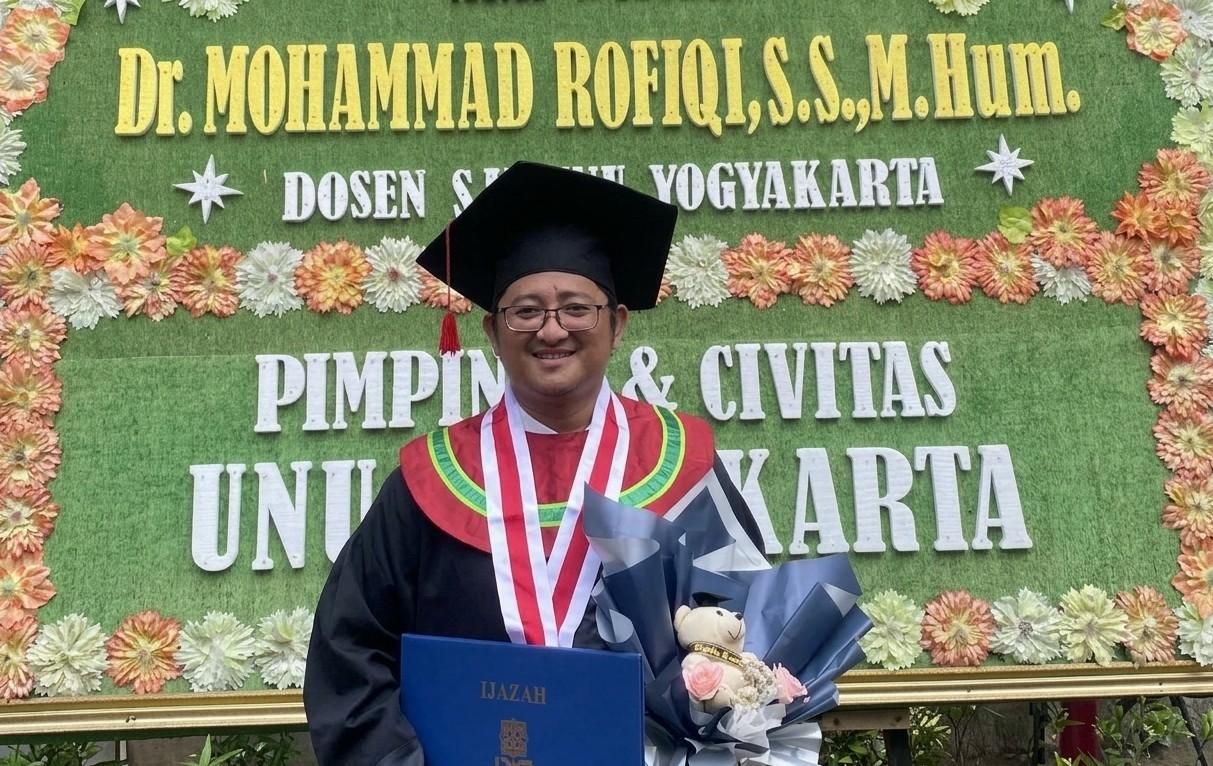
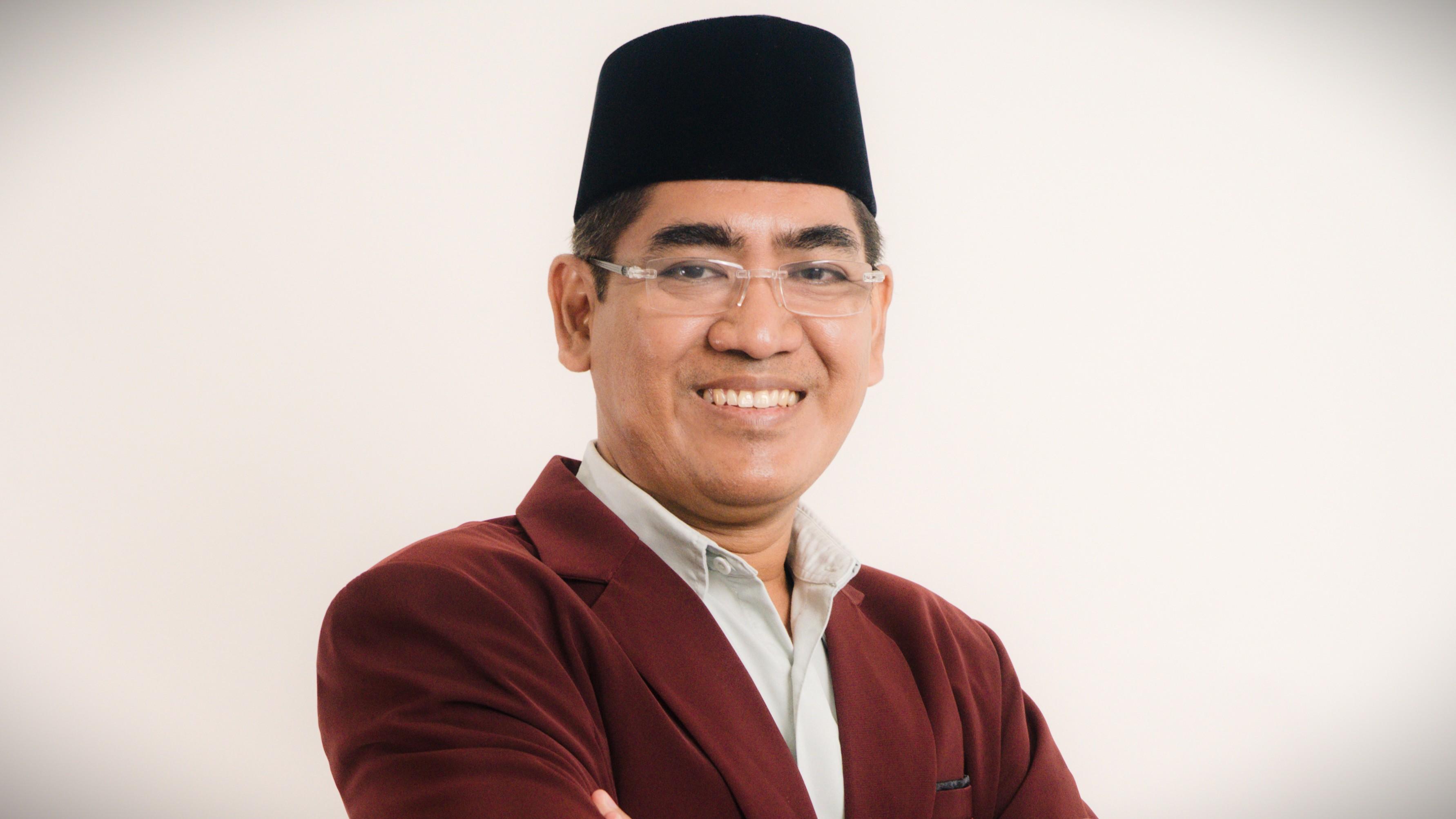
Yogyakarta, Indonesia – Universitas Nahdlatul Ulama Yogyakarta (UNU Jogja) has added another doctoral degree holder to its academic community in Islamic Studies. Mohammad Rofiqi, a lecturer in the Interdisciplinary Islamic Studies (SII) Study Program, Faculty of Islamic Studies, UNU Jogja, officially earned his doctoral degree after attending the graduation ceremony at Universitas Islam Negeri (UIN) Sunan Kalijaga Yogyakarta on 11 November 2026. His doctoral research examined the representation of the Iran–Israel conflict in digital news coverage published by Aljazeera.net.
Dean of the Faculty of Islamic Studies, Hamdi Putra Ahmad, S.Ag., M.Phil., expressed his appreciation for this academic achievement. He said the accomplishment strengthens UNU Jogja lecturers’ scholarly contributions, particularly in developing Islamic Studies that engage with social dynamics and global communication.
“This achievement strengthens UNU Jogja’s academic capacity, particularly in the development of Arabic language studies, Islamic Studies, and media analysis,” he said.
Mohammad Rofiqi’s dissertation is entitled Al-Idrāk al-Ijtimā‘ī wa Istrātījiyyāt at-Tamṡīl fī al-Khiṭāb al-Ikhbārī ar-Raqamī li-Qanāt al-Jazīrah Net Ḥawla aṣ-Ṣirā‘ al-Īrānī–al-Isrā’īlī: Dirāsah fī at-Taḥlīl an-Naqdī li al-Khiṭāb, or Social Cognition and Representation Strategies in Aljazeera.net Digital News Discourse on the Iran–Israel Conflict: A Critical Discourse Analysis Study.
The research is based on the understanding that mass media do more than convey information; they also shape how the public interprets events. Through word choices, headline construction, information emphasis, and the selection of news sources, media outlets can construct particular representations of the parties involved in a conflict.
Analyzing 35 Reports on the Iran–Israel Conflict
In his research, Mohammad Rofiqi analyzed 35 Arabic-language news reports published on Aljazeera.net’s official website between April and October 2024. He noted that the period saw an escalation in the Iran–Israel conflict, ranging from indirect confrontation to open military attacks.
The study employed a descriptive qualitative approach using Teun A. van Dijk’s Critical Discourse Analysis framework, which examines the relationship between text structures, social cognition, and social context. The analysis was further supported by Gorys Keraf’s theory of diction to examine the functions and meanings of language choices in news coverage.
Through this approach, Mohammad Rofiqi explored how events were reported, which parties received greater emphasis, and how language use shaped the representation of the actors involved in the conflict.
Iran and Israel Portrayed Differently
The findings show that Aljazeera.net employed several representation strategies in its coverage, including emphasizing particular events, prioritizing information, constructing cause-and-effect relationships, and assigning responsibility to the parties involved.
In the reports analyzed, Israel was more frequently portrayed as a military actor carrying out direct actions, such as attacks, bombings, and military operations. Iran, meanwhile, was often represented as a strategic actor responding to Israel’s actions, although in certain contexts it was also portrayed as a party carrying out attacks and issuing military threats.
However, the study shows that representations of the two countries were not fixed. Their positions as attackers, targets of attacks, or parties carrying out retaliation could shift depending on the context and developments surrounding each event.
Word Choices Shape Interpretations of the Conflict
One of the study’s key findings concerns the use of diction in reporting on the conflict. Terms such as al-hujūm (الهجوم/attack), al-qaṣf (القصف/bombing), al-radd (الرد/response or retaliation), and al-tahdīd (التهديد/threat) function not merely as labels for events but also help construct understandings of the actions, responsibilities, and positions of the actors involved.
For example, the use of the word “attack” can position one party as the initiator of military action, while the term “retaliation” connects that action to an earlier event. Thus, word choices also influence how readers understand cause-and-effect relationships within the conflict.
The research further demonstrates that the meaning of a word cannot be separated from its context, the identity of the source, or the way a media outlet quotes and presents statements.
Examining Social Cognition in News Coverage
Another finding indicates that Aljazeera.net’s coverage constructed an image of the Iran–Israel conflict as a series of interconnected actions and reactions within the political dynamics of the Middle East.
This pattern can be seen in the selection of information, the connections established between events, the diversity of news sources, and the attribution of responsibility to each party.
Mohammad Rofiqi’s research does not conclude that Aljazeera.net simply favors Iran or opposes Israel. Instead, the representations identified reveal a complex pattern of news coverage shaped by the context of events, information sources, and the dynamics of each country’s actions.
Contributing to Arabic Language Studies and Digital Media Literacy
Academically, the dissertation contributes to the development of Arabic linguistics, particularly in the fields of critical discourse analysis, semantics, and digital media studies. Mohammad Rofiqi’s research also demonstrates how language analysis can be used to understand the ways media construct social and political representations through news coverage.
Mohamad Rofiqi said the findings highlight the importance of media literacy amid the rapid development of digital communication technologies. He emphasized that the public needs to read news critically by considering not only the information presented but also the choice of words, headlines, news sources, and the context in which information is delivered.
Furthermore, he hopes the research will contribute to the development of language studies, particularly Arabic, while expanding the application of linguistic approaches to understanding contemporary issues.
“Through this research, I hope Arabic language studies, in particular, will continue to develop and contribute to understanding various social, political, and global communication issues,” Mohammad Rofiqi said. []
Reporter: Latifah
Share
Related News
Promoting an Entrepreneurial Spirit, UNU Jogja Management Students Learn Business Strategies from Practitioners
Published by Latifatussolikhah, 11 Nov, 2026 | Duration. 4 Minutes
UNU Jogja Faculty of Education Students Contribute to the Education of Indonesian Migrant Workers’ Children in Malaysia
Published by Latifatussolikhah, 10 Nov, 2026 | Duration. 3 Minutes
Breaking into Global Academia: Master’s and PhD Scholarship Opportunities Through Inter-University Partnerships
Published by Latifatussolikhah, 30 Oct, 2026 | Duration. 11 Minutes
Popular News
UNU Jogja Pharmacy Students Win Third Place in DIY at Psycholympics 2026 e-Sports Championship
Published by Latifatussolikhah, 13 Nov, 2026 | Duration. 3 Minutes
The Campus Website Reflects Institutional Transformation as UNU Jogja Wins Bronze at the 2026 Diktisaintek Awards
Published by Latifatussolikhah, 11 Nov, 2026 | Duration. 3 Minutes
UNU Jogja Joins the UN Global Compact, Strengthening Global Collaboration on Sustainability
Published by Latifatussolikhah, 9 Nov, 2026 | Duration. 4 Minutes
Syahra Ikmala Nur Azizah, UNU Jogja Agricultural Technology Student, Wins First Place at National Sunan Kalijaga CUP V Pencak Silat Championship
Published by Latifatussolikhah, 3 Nov, 2026 | Duration. 3 Minutes