
Nurturing Hope (3)
Published by Latifatussolikhah, 30 Oct, 2026
Est. 10 Minutes
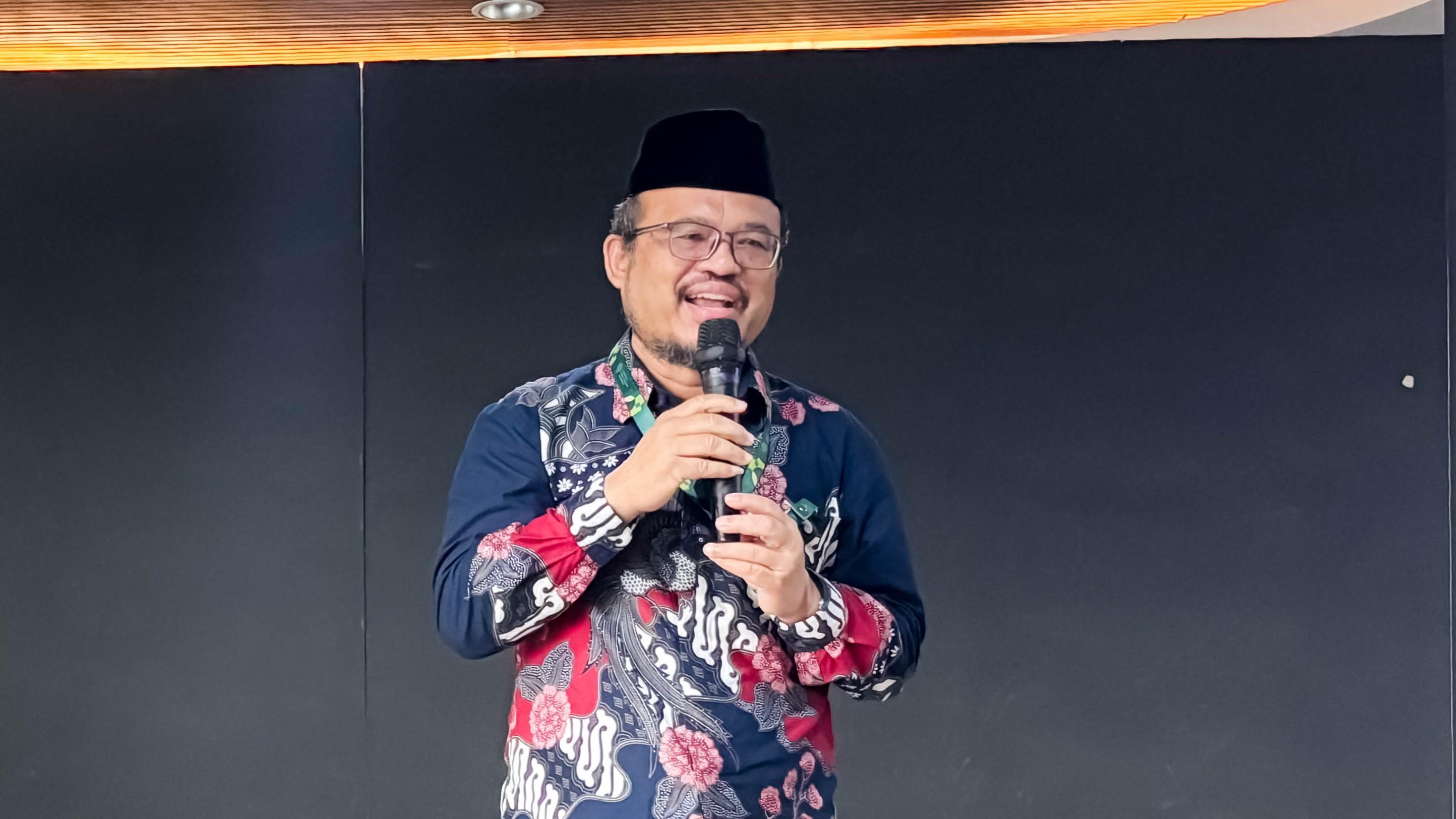
By Dr. Abdul Ghoffar, M.B.A.
[OPINION] Sometimes, an idea may seem ordinary when it is first introduced. It may emerge from a conversation, from reading about developments elsewhere, or simply from a sense of unease about something that few people have given much thought to. Yet an idea that is nurtured with dedication, given room to grow, and pursued consistently may one day become something meaningful. This is more or less how I view the journey of the idea of developing the halal industry at Universitas Nahdlatul Ulama Yogyakarta (UNU Jogja).
Perhaps, if we search the internet using the keyword Faculty of Halal Industry, UNU Yogyakarta will be among the first results to appear. It may even be that, to this day, it remains the only faculty in Indonesia with such a name. I do not intend to assert that no other higher education institution uses a similar name. Nevertheless, choosing the name Faculty of Halal Industry was certainly unusual at the time. The study programs within it were not entirely new. However, bringing several study programs together under a faculty oriented toward the halal industry reflected a particular perspective on the future.
For me, that is what makes an idea interesting. Something that already exists can take on a different meaning when viewed from a different perspective. Pharmacy or Agricultural Product Technology, for example, have traditionally been understood as distinct fields of study, each with its own characteristics and objectives. Yet, when placed within the framework of the halal industry, these fields can be seen as parts of a broader ecosystem. A common thread connects scientific knowledge, societal needs, Islamic values, and future economic opportunities.
I still remember around 2015–2016, when we were preparing to establish UNU Yogyakarta. One of our important tasks was to determine which study programs to open and to formulate the names of the faculties that would house them. Discussions on this matter were quite intensive. In naming study programs, we had to follow the regulations and nomenclature established by the Ministry of Higher Education. Faculty names, meanwhile, offered universities greater room for creativity, provided they remained within the applicable regulations.
It was during this process that the idea of the Faculty of Halal Industry emerged. The idea did not arise in a vacuum. We were following the growing discourse on the halal economy and industry in various parts of the world. A notable shift was taking place in how Muslims viewed halal. It was no longer understood solely as a question of whether something was permissible for consumption under religious law. Instead, it was increasingly developing into an ecosystem encompassing production, distribution, finance, lifestyle, technology, and global trade.
This development was closely connected to the world's large Muslim population and growing awareness of practicing Islamic teachings more comprehensively in everyday life. Demand for products and services that comply with Islamic principles continued to expand. At the same time, the halal and thayyib market was also growing beyond Muslim communities. Products that guarantee cleanliness, safety, quality, and responsible production processes have their own appeal to wider society. Thus, halal has a religious dimension, but it also intersects with quality, trust, health, and business sustainability.
Initially, much of the Muslim world's attention was focused on Islamic finance or sharia-compliant finance. The establishment of Islamic banks was an important sign that Islamic principles could be applied within a modern economic system. Over time, however, the scope of the halal industry expanded. At least six sectors were widely discussed at the time: finance, food and beverages, Muslim fashion, pharmaceuticals, cosmetics and personal care, and halal tourism.
Various industry reports from that period also indicated the enormous potential of the global halal economy, with its value estimated at trillions of US dollars and promising growth projections. These figures, of course, must be interpreted in light of each report's sectoral coverage, measurement year, and calculation methods. Nevertheless, regardless of the differences between estimates, one thing is clear: the halal industry is not a small market serving only the needs of a particular community. It is a broad, dynamic economic arena with long-term prospects.
The question is: amid such significant opportunities, what can a university do, particularly one established on the foundation of Islamic values?
I believe this question was one of the important considerations behind the emergence of the Faculty of Halal Industry at UNU Yogyakarta. When we submitted our proposal to establish the university, several study programs were eventually approved, including Pharmacy, Agricultural Product Technology, and Agribusiness. These three programs have strong links to the development of the halal industry, particularly in pharmaceuticals and food and beverages. They did not cover every sector within the expanding halal industry, of course. However, what was available at the time was enough to provide us with a starting point.
When building something, we do not always have to wait until every resource is available. Sometimes, we need to begin with what we have while continuing to develop the capacity to reach greater goals. What matters is not simply how complete our initial resources are, but whether we have a clear vision of the direction we want to take.
This is where UNU Yogyakarta's vision, grounded in the Islamic values of Ahlussunnah wal Jamaah (Aswaja), becomes relevant. Islamic values should not stop at institutional identity, let alone become mere ornaments in vision and mission documents. They must be translated into academic priorities, choices of disciplines, research activities, community engagement, and institutional development. In this way, religion becomes not only a source of values but also an inspiration for generating knowledge, innovation, and public benefit.
In this context, the halal industry is not merely a business opportunity that happens to be growing. It can serve as a meeting point between values and scientific knowledge, faith and professionalism, as well as religious responsibility and societal needs. Of course, none of this can be achieved simply by giving a faculty a particular name. A name is only an initial marker. Far more important is how the idea behind that name is translated into concrete action.
Therefore, after the idea of the Faculty of Halal Industry began to take shape, we sought to develop an appropriate approach. Academically, the curriculum was directed toward incorporating perspectives relevant to the halal industry. Lecturers were encouraged to pursue research related to these issues. We also sought to build collaborations with various stakeholders, including industry and communities, so that academic activities would remain connected to real-world needs.
We also established the Halal Center, which plays a role in preparing halal supervisors and auditors, as well as facilitating halal certification in accordance with applicable regulations. This institution is important because the development of the halal industry cannot rely solely on knowledge acquired in lecture halls. It requires trained professionals, an understanding of regulations, the ability to provide assistance, and strong relationships with business operators, particularly micro, small, and medium-sized enterprises that need support in meeting halal requirements.
In another area, we established Shafiec (Sharia Finance and Digital Economics), which focuses more closely on Islamic finance and the digital economy. Its presence expands our development efforts beyond production and halal assurance to include financing, entrepreneurship, and the use of technology in economic activities. After all, an industry cannot develop optimally if it focuses only on its products while neglecting the financing systems, distribution, marketing, and infrastructure that support them.
Together with relevant academic programs, the Halal Center and Shafiec are expected to contribute to building a halal industry ecosystem at UNU Yogyakarta. Such an ecosystem, however, cannot be built by just one or two institutions. It requires connections among education, research, certification, industry, government, communities, and other stakeholders. Each component must reinforce the others rather than operate in isolation.
Looking back, this journey is still a long one. What we have started does not mean that our broader aspirations have already been achieved. In fact, once an idea begins to take institutional form, the next challenges become more tangible. How can we ensure that the halal industry orientation does not remain merely a faculty identity? How can we make sure the curriculum genuinely responds to the industry's evolving needs? How can we improve research quality and expand partnerships? And, no less importantly, how can we ensure that UNU Yogyakarta's presence delivers tangible benefits to society?
There are still many aspects of the halal industry that we have yet to develop seriously. Muslim fashion, cosmetics and personal care, halal tourism, and various other fields offer opportunities worth considering. Technological developments also open up new possibilities, from digitizing halal supply chains to using artificial intelligence to support production, monitoring, and public services. However, not every opportunity needs to be pursued at once. We must carefully assess which areas best match our capacity, resources, academic strengths, and societal needs.
Ambition is important, but it must be accompanied by the ability to understand circumstances and set priorities. We do not need to develop everything simultaneously. Sometimes, focusing deeply on one or two areas can yield more meaningful results than trying to do everything without achieving excellence in any particular field. Universities need the courage to dream big while maintaining the discipline to move forward in a measured way.
Ultimately, I see the idea of the Faculty of Halal Industry as one of our efforts to nurture hope for the future of UNU Yogyakarta. It reflects the hope that a university rooted in Islamic tradition and Nahdlatul Ulama can play an important role in the development of modern knowledge and the economy. It embodies the hope that Islamic values will not leave us behind in a changing world but will instead inspire us to help shape the direction of that change. And it reflects the hope that a growing institution can establish its place through the courage to take initiative and the commitment to build excellence.
I imagine a future in which UNU Yogyakarta is known not merely for having a Faculty of Halal Industry, but also for its tangible contributions to the development of Indonesia's halal industry. It will be a place where knowledge, innovation, professional talent, entrepreneurship, and new ideas emerge. It will be a trusted partner for industry players, government, and communities. More importantly, it will demonstrate that economic development can go hand in hand with Islamic values, professionalism, justice, and public benefit.
Of course, none of this will happen overnight. It requires sustained effort, patience, collaboration, and the willingness to keep learning. But is that not what nurturing hope means—being willing to preserve an aspiration even when the path toward achieving it has yet to fully unfold?
An idea may begin with something simple. Yet, when nurtured with vision, translated into action, and sustained with dedication, it can grow into something meaningful. For me, therefore, the Faculty of Halal Industry is more than just the name of a faculty. It is part of an effort to connect values, scientific knowledge, and the future. It may be a modest step, but it is one worth nurturing so that, in time, it can bring broader benefits to the Muslim community, the nation, and humanity.[]
About the Author: Dr. Abdul Ghoffar, M.B.A., currently serves as Vice Rector for Islamic Boarding School Education and Social Transformation at Universitas Nahdlatul Ulama Yogyakarta. In addition to his academic work, he is known as a social activist and Islamic scholar. He also serves as an A’wan Syuriah of the Regional Board of Nahdlatul Ulama (PWNU) in the Special Region of Yogyakarta for the 2022–2027 term.
Editor: Latifah
Editorial Note: This article is the author's own work. All content, views, interpretations, and information presented are the author's responsibility. The editorial team is not responsible for the views or opinions expressed in this piece, apart from editing undertaken for publication purposes.
Share
Related News
Visiting the Land of Imams: Exploring Uzbekistan’s Rich Islamic Heritage
Published by Latifatussolikhah, 30 Oct, 2026 | Duration. 5 Minutes
It Is Time for Santri to Level Up: Bringing Traditional Values to the International Stage
Published by Latifatussolikhah, 23 Oct, 2026 | Duration. 7 Minutes
UNU Jogja Traces Islamic Scholars’ Legacy Through Auliya Pilgrimage on National Santri Day 2026
Published by Latifatussolikhah, 23 Oct, 2026 | Duration. 3 Minutes
Popular News
UNU Jogja Students Represent Indonesia at Islamic World Cultural Dialogue Forum in Russia
Published by Latifatussolikhah, 26 Oct, 2026 | Duration. 3 Minutes
Five PGSD UNU Jogja Alumni Pass Teacher Professional Education Program, Prepare to Become Future Teachers
Published by Latifatussolikhah, 1 Oct, 2026 | Duration. 4 Minutes
UNU Jogja Management Student Muhamad Chaerul Faalih Named 2nd Runner Up Putra Bahari DIY 2026
Published by Latifatussolikhah, 30 Sep, 2026 | Duration. 5 Minutes
UNU Jogja Students Pass P2MW Selection and Join KMI Expo XVII 2026
Published by Latifatussolikhah, 15 Sep, 2026 | Duration. 3 Minutes