
Building a Pesantren-Based Ecosystem
Published by Latifatussolikhah, 9 Nov, 2026
Est. 13 Minutes
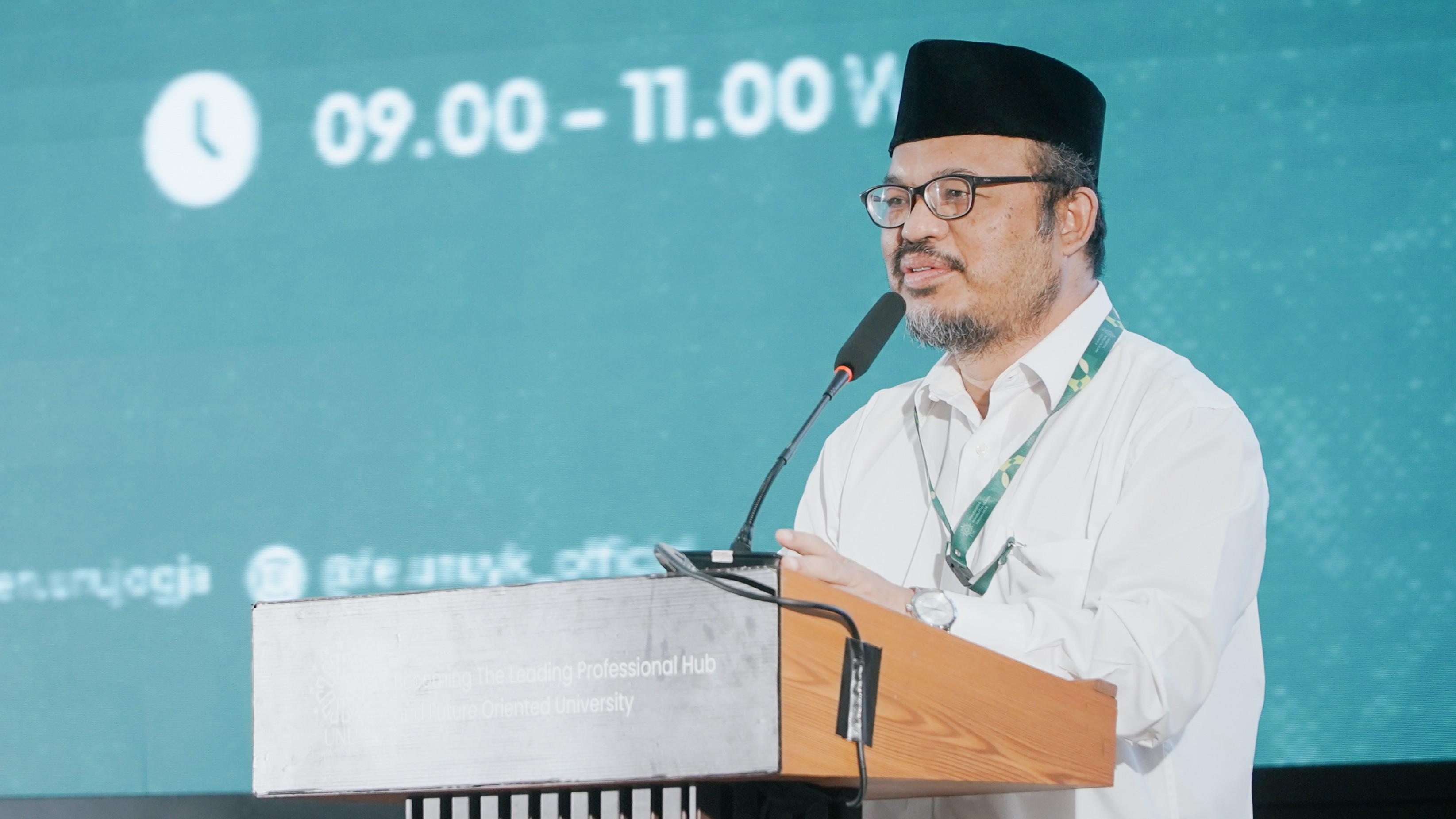
By Dr. Abdul Ghoffar, M.B.A.
[OPINION] As I have previously discussed in my article A Pesantren-Based University, Universitas Nahdlatul Ulama Yogyakarta (UNU Yogyakarta) has undertaken a number of strategic initiatives to bring this vision to life. Some of these initiatives are still at an early stage and require further development. Nevertheless, they represent the initial foundations for establishing a pesantren-based ecosystem across the university. These efforts include the establishment of the Faculty of Islamic Studies (FDI), the founding of UNU Pesantren, the integration of Ahlussunnah wal Jamaah (Aswaja) values into academic and non-academic activities, and the development of collaborations with various pesantren and Nahdlatul Ulama (NU) institutions.
In my view, a pesantren-based university is not simply a university that has a pesantren within its campus. More importantly, the pesantren tradition must become the spirit that shapes every aspect of university life. It should not be confined to particular programmes, administrative units, or activities. Instead, it must grow into a set of living values that shape the way people think, behave, interact, make decisions, and develop the institution.
In this context, the pesantren tradition refers to Islamic values that have grown and evolved within the pesantren tradition. These values have shaped santri (pesantren students) into individuals who are devout, knowledgeable, well-mannered, independent, and socially conscious. At UNU Yogyakarta, these values are expected not only to be reflected in the personal conduct of every member of the university community but also to become embedded in institutional governance and culture.
At the same time, UNU Yogyakarta is a higher education institution with a responsibility to advance various academic disciplines and equip students with professional competencies in their respective fields. Therefore, what we seek to build is an integration of pesantren-based character formation, mastery of knowledge, and professional competence. Through this integration, we hope to nurture what I call professional shalih: professionals who remain grounded in moral and spiritual values, uphold integrity, and are capable of contributing to the common good and public welfare (maslahah).
Thus, building a pesantren-based ecosystem is essentially an effort to integrate values, knowledge, and action into a unified educational vision.
Ecosystems and Collective Awareness
One important principle in building an ecosystem is the recognition that no ecosystem can grow through isolated efforts. An ecosystem requires interconnectedness, mutual support, and a shared commitment to working towards a common vision. Each component may have its own functions, authority, and responsibilities, but all must form part of a larger structure in which every element reinforces the others.
For this reason, we must continuously guard against the tendency towards sectoral egos that sometimes emerge in organisational life, including within universities. We cannot build a university simply by relying on the individual strengths of each faculty, institution, or administrative unit. What matters far more is how these different capacities can be connected and brought together to achieve a shared vision.
Coordination, collaboration, togetherness, and integration must become guiding principles in every institutional endeavour. They should not remain organisational slogans but must be translated into everyday practice. An ecosystem is not built merely by bringing together various components; it requires ensuring that every component is interconnected and contributes to the development of the whole.
We are seeking to build a university ecosystem grounded in pesantren values. This is also a consequence of UNU Yogyakarta's vision, which is rooted in the teachings of Islam Ahlussunnah wal Jamaah (Aswaja) an-Nahdliyyah. These values must serve as both the foundation and guiding orientation of institutional development, rather than merely an identity stated in official institutional documents.
Alhamdulillah, UNU Yogyakarta currently has a number of faculties, institutions, and programmes that can serve as important components of this ecosystem. Naturally, the structure is not yet complete. There are still gaps to be filled, relationships to be strengthened, and initiatives to be further developed. Nevertheless, I believe it is important for us to begin recognising, connecting, and consolidating the potential we already possess.
In the following sections, I would like to outline several key components of UNU Yogyakarta's pesantren-based ecosystem.
First, the Faculty of Islamic Studies (FDI)
I envision FDI as the university's heart of values. The faculty is expected to serve as one of the main pillars supporting Islamic and Aswaja values throughout campus life. At the same time, FDI has a more specific academic mandate: to prepare future Islamic scholars and religious leaders equipped with deep knowledge and the ability to respond to contemporary developments.
Currently, FDI offers one undergraduate programme, namely Islamic Interdisciplinary Studies (Studi Islam Interdisipliner/SII). In addition, FDI is preparing to offer a master's programme in Islamic Studies. The programme has secured its operating licence and is being developed through a collaboration with the University of Humanities in the United Arab Emirates (UAE).
The existence of FDI is certainly not intended to make the development of Islamic knowledge the sole responsibility of one faculty. On the contrary, FDI is expected to become a centre for strengthening Islamic values and knowledge that can engage with all academic disciplines across UNU Yogyakarta. In this way, Islamic values will not be confined to religious studies but will also serve as ethical and epistemological perspectives in the development of knowledge.
Second, UNU Pesantren
From the outset, the establishment of UNU Pesantren was intended as an integral part of the process of shaping students' character (character building). The original vision was quite ambitious: first-year students were expected to experience pesantren life as part of their university education.
However, we must also remain realistic about the existing conditions. Limitations in facilities and infrastructure have not yet made it possible to implement this vision for all students. Therefore, for the time being, we have adopted a policy of providing opportunities for students who are willing and interested in living and studying at the pesantren. Although the number remains limited, this initiative is nevertheless important to sustain and develop.
Looking ahead, we are designing a Green Pesantren concept as the future direction for UNU Pesantren. I envision it not only as a place for religious guidance and character development but also as a learning environment that promotes sustainable living, environmental awareness, independence, and social responsibility.
In this way, the pesantren will not merely serve as a supporting facility for the university but will become an important space where pesantren values are practised and brought to life.
Third, the Division of Pesantren Affairs
During UNU Yogyakarta's first leadership term, pesantren-related affairs were entrusted to FDI and coordinated by the Vice Rector for Academic Affairs. As the institution developed and the need to establish a pesantren-based ecosystem became increasingly evident, a dedicated division was established during the second leadership term, under the coordination of the Vice Rector for Pesantren Education and Social Transformation.
This change was certainly more than a matter of organisational restructuring. It reflected a growing recognition that developing a pesantren-based university requires more focused attention, coordination, and strategic orchestration. The pesantren tradition cannot be understood merely in terms of religious education or the management of an Islamic boarding school. Rather, it must become an agenda that spans faculties, institutions, and academic disciplines.
Accordingly, this division is expected to serve as both a coordinating body and a driving force behind various initiatives aimed at strengthening pesantren values. These efforts include student development, academic advancement, campus life, and social transformation.
Fourth, Collaboration with Pesantren Institutions
We recognise that pesantren are the historical, cultural, and social foundations of Nahdlatul Ulama. They are not merely educational institutions but also centres for cultivating scholarly traditions, community development, and the transmission of Ahlussunnah wal Jamaah Islamic values. Therefore, UNU Yogyakarta's relationship with pesantren must be developed as a strategic and sustainable partnership.
One important aspect of this collaboration is, of course, expanding access to higher education for santri. In a certain sense, pesantren also represent a potential source of future UNU Yogyakarta students. However, I believe it would be too narrow to define our relationship with pesantren solely in terms of student recruitment.
What we seek to establish is a broader and more substantive partnership. Pesantren and universities can learn from one another, strengthen each other, and work together across various fields. Such collaboration can be developed through the implementation of the Three Pillars of Higher Education (Tri Dharma Perguruan Tinggi), research initiatives, community engagement, capacity-building programmes for pesantren institutions, and various social and community empowerment initiatives.
Thus, UNU Yogyakarta's relationship with pesantren should not be viewed merely as a relationship between a university and a source of prospective students. Rather, it should be a strategic partnership between two institutions that share common values and a commitment to public service.
Fifth, Developing the Halal Industry
Since its establishment, UNU Yogyakarta has positioned the halal industry as one of its academic development priorities. This is reflected, among other things, in the establishment of the Faculty of Halal Industry (FIH), which comprises several study programmes: Pharmacy, Agricultural Product Technology (THP), and Agribusiness.
These three programmes represent different dimensions of halal industry development. Pharmacy focuses on pharmaceutical products and services, while THP and Agribusiness are concerned with the food, agriculture, and halal product value chains.
However, we certainly do not intend to limit halal-related issues to these sectors. The development of the halal industry offers much broader opportunities, ranging from finance and cosmetics to fashion and tourism. For this reason, UNU Yogyakarta is also expanding its focus to the financial sector through the establishment of Shafiec (Shariah Finance and Economic), although this initiative has not yet taken the form of an additional academic study programme.
In my view, developing the halal industry means more than simply choosing an academic field or pursuing economic opportunities. It is also a way of translating Islamic values into professional life and productive sectors. Halal principles, therefore, should not be limited to determining what is permissible and impermissible. They should also encompass production ethics, transactional justice, social responsibility, sustainability, and the pursuit of the common good.
From this perspective, the development of the halal industry represents one way in which Aswaja an-Nahdliyyah values can inspire and inform the advancement of knowledge, technology, and the economic life of society.
Sixth, Developing Green Energy and Environmental Sustainability
In addition to the halal industry, UNU Yogyakarta is also paying increasing attention to green energy and environmental sustainability. I believe these are essential components of a pesantren-based university. Environmental stewardship is, after all, part of our religious and humanitarian responsibility.
Islamic teachings remind us that human beings have a responsibility to protect life and refrain from causing destruction on earth. Therefore, environmental issues should not be treated as supplementary concerns. Instead, they must become part of the university's academic development and community engagement priorities.
In this context, UNU Yogyakarta is involved in the Pesantren EMAS (Ekosistem Madani Atasi Sampah) movement, a community of pesantren institutions committed to improving waste management. The movement involves several pesantren and villages, with a collaborative network extending from West Java to East Java.
Within UNU Yogyakarta itself, we are also developing the Social Laboratory (Labsos). One of its activities involves establishing partnerships with several pesantren and villages across Yogyakarta, outside the Pesantren EMAS community, particularly in improving waste management practices and strengthening environmental awareness among local communities.
Furthermore, we are developing the Decarbonomics Study Centre, which focuses on research, analysis, development, and the promotion of decarbonisation from economic, environmental, and sustainability perspectives. This centre is expected to provide a space for knowledge development while making an academic contribution to addressing the challenges of transitioning towards a low-carbon economy.
We are also exploring a potential partnership with GEM Co. Ltd., a company based in China, in the field of metallurgy. This collaboration could open up opportunities for UNU Yogyakarta to expand its contribution to the development of technology and industry with a strong focus on environmental sustainability.
These various initiatives demonstrate that the pesantren tradition is not solely concerned with cultivating individual piety. It also encompasses social and ecological responsibility. Piety must have both social and environmental dimensions. In other words, being a righteous individual also means caring about the continuity of life and the future of our planet.
Nurturing Something Greater
Looking at these initiatives, it is clear that UNU Yogyakarta is striving to build a structure comprising multiple interconnected elements and dimensions. These include Islamic and pesantren values, education and knowledge development, character formation and professional competence, the halal industry, community empowerment, and environmental awareness and sustainability.
At first glance, these initiatives may appear to be separate programmes operating independently. However, if we can connect and integrate them within a shared value-based framework, they can become parts of an ecosystem in which each element reinforces the others. This is where collective awareness becomes essential: we must recognise that we are not merely developing individual programmes or administrative units. We are building a model of higher education with a distinctive Islamic character and orientation.
Of course, this journey is still a long one. Not every idea can be realised at once. Some initiatives remain at the exploratory stage, others are still growing, and several require further conceptual and institutional development. Nevertheless, I believe that institution-building is never a task that can be completed within a single leadership term. It is a long-term process that requires continuity of vision, consistency of effort, and a willingness to work together.
What we must safeguard is the direction and interconnectedness of these initiatives. We must not end up with numerous programmes but no ecosystem. Nor should individual units develop independently without strengthening one another. Instead, we must continue building bridges across faculties, institutions, disciplines, and between the university and society.
Ultimately, I would like to reiterate that building a pesantren-based ecosystem at UNU Yogyakarta is not simply an attempt to bring pesantren traditions into the university environment. More importantly, we are striving to embed pesantren values into the development of knowledge, professional excellence, institutional governance, social life, and environmental responsibility.
We aspire to nurture a generation that is not only academically and professionally competent but also spiritually grounded, morally mature, intellectually broad-minded, and socially conscious. A generation capable of integrating piety with professionalism, knowledge with service, and progress with the common good.
Perhaps what we are doing today still consists of small steps. But are not great structures always built upon foundations laid with dedication? We do not have to accomplish everything today. What matters is that we know the direction we are heading, share a commitment to moving forward together, and continue nurturing the efforts we have already begun.
I firmly believe that if all these potentials can continue to be connected, coordinated, and developed within a unified vision, UNU Yogyakarta's pesantren-based ecosystem will grow into something greater and more strategic. Its significance will extend beyond the development of the university itself, contributing to the role of pesantren, higher education institutions, and Nahdlatul Ulama in addressing the challenges facing society, the nation, and civilisation. []
About the Author : Dr. Abdul Ghoffar, M.B.A., currently serves as Vice Rector for Pesantren Education and Social Transformation at Universitas Nahdlatul Ulama Yogyakarta. In addition to his academic work, he is known as a social activist and Islamic scholar. He is also actively involved in the Regional Board of Nahdlatul Ulama (PWNU) of the Special Region of Yogyakarta, serving as an A'wan Syuriah for the 2022–2027 term.
Editor: Latifah
Editor's Note: This article is the author's original work. All content, views, interpretations, and information presented are the responsibility of the author. The editorial team is not responsible for the views or opinions expressed in this article, apart from the editorial adjustments made for publication purposes.
Share
Related News
Visiting the Land of Imams: Exploring Uzbekistan’s Rich Islamic Heritage
Published by Latifatussolikhah, 30 Oct, 2026 | Duration. 5 Minutes
Good UNU Governance (GUNUG): Building Shared Awareness and a Culture of Quality
Published by Latifatussolikhah, 2 Nov, 2026 | Duration. 10 Minutes
Nurturing Hope (3)
Published by Latifatussolikhah, 30 Oct, 2026 | Duration. 10 Minutes
Popular News
UNU Jogja Joins the UN Global Compact, Strengthening Global Collaboration on Sustainability
Published by Latifatussolikhah, 9 Nov, 2026 | Duration. 4 Minutes
Syahra Ikmala Nur Azizah, UNU Jogja Agricultural Technology Student, Wins First Place at National Sunan Kalijaga CUP V Pencak Silat Championship
Published by Latifatussolikhah, 3 Nov, 2026 | Duration. 3 Minutes
UNU Jogja Students Represent Indonesia at Islamic World Cultural Dialogue Forum in Russia
Published by Latifatussolikhah, 26 Oct, 2026 | Duration. 3 Minutes
Five PGSD UNU Jogja Alumni Pass Teacher Professional Education Program, Prepare to Become Future Teachers
Published by Latifatussolikhah, 1 Oct, 2026 | Duration. 4 Minutes