
When Bu Nyai Create Their Own Space
Published by Latifatussolikhah, 18 Sep, 2026
Est. 8 Minutes
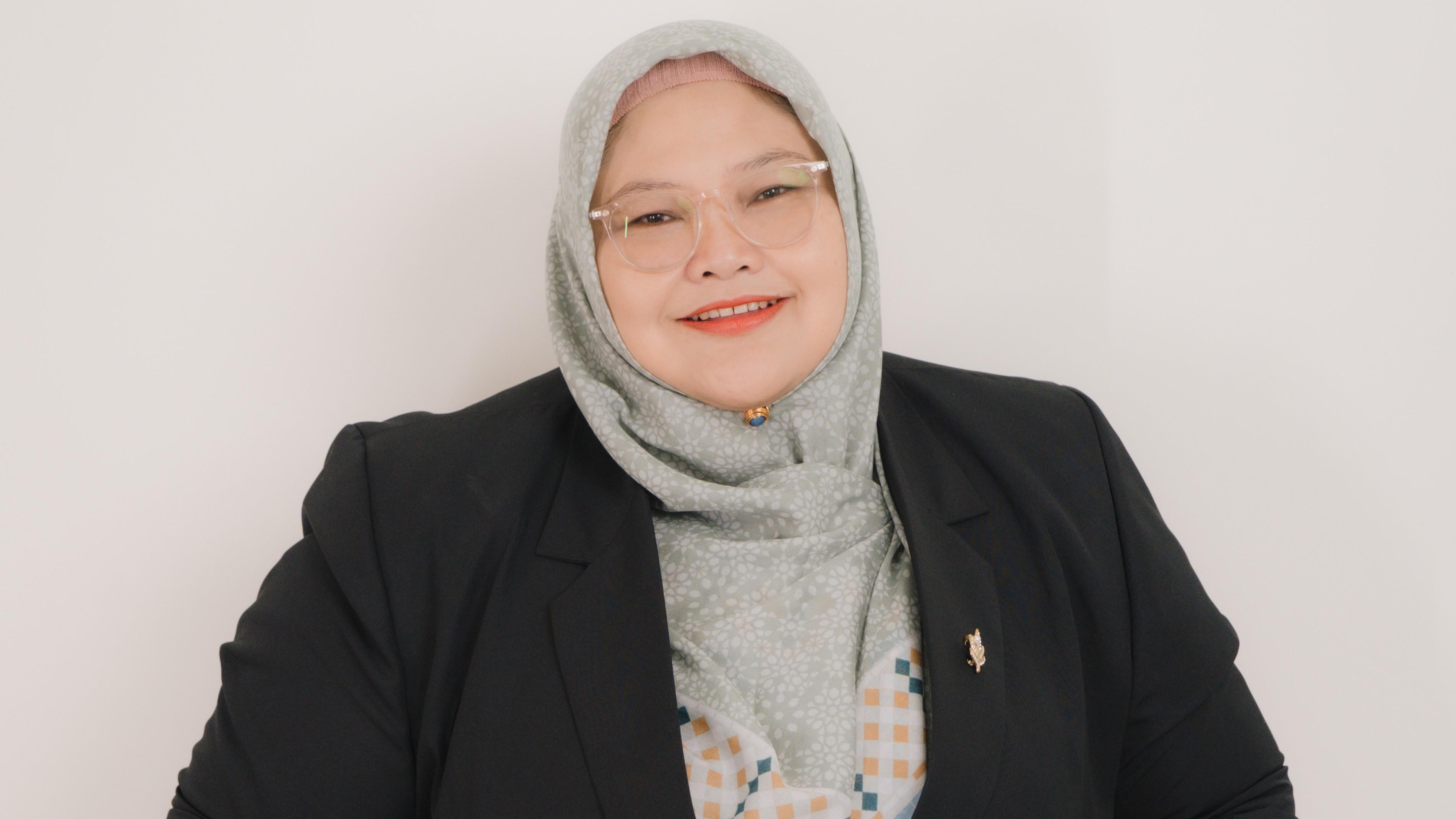
By: Dr. Mustaghfiroh Rahayu
[OPINION] NU has a long history of organizing women through Muslimat NU, Fatayat NU, and various institutions and communities. But a new phenomenon is now emerging: Bu Nyai as organizing actors. In recent years, Bu Nyai have become increasingly visible in the public sphere. They build organizations, develop networks, lead Islamic boarding schools and educational institutions, initiate social activities, and increasingly speak out on various issues affecting women.
Several networks, including Jam’iyah Mudarosatil Qur’an lil Hafdzaat (JMQH), Jam’iyah Perempuan Pengasuh Pesantren dan Muballighat (JPPPM), Bu Nyai Nusantara, Forum Perempuan Pesantren, and the Indonesian Women Ulama Congress, have kept Bu Nyai engaged in one gathering after another.
These networks show that Bu Nyai are no longer merely supporting actors in the NU movement. They are beginning to build their own networks, organizations, authority, and agendas. Thus, in the context of NU today, the question is no longer “What can NU do for women?” but rather, “What can NU learn from the women’s movement emerging from within NU itself?”
Bu Nyai Are Not Merely Objects of Empowerment
In many discussions about women, a frequently asked question is: how can women be empowered? This question is certainly important, but to understand the development of Bu Nyai today, perhaps we need to ask a slightly different question: what are Bu Nyai doing to empower themselves and the women around them?
This second question matters because Bu Nyai today do not always wait for space to be provided by organizations, the state, or religious institutions. Instead, they are increasingly creating their own spaces. They build organizations and networks, mobilize resources, develop educational institutions, organize congregations, initiate social activities, establish businesses, and appear in various public forums.
JMQH, JPPPM, Bu Nyai Nusantara, Nawaning, and various other networks demonstrate that Bu Nyai have become actors capable of organizing their own knowledge, resources, and communities.
What is interesting is that the activities of Bu Nyai today not only show that they are increasingly present in the public sphere, but also that they are beginning to organize the various forms of capital they possess into collective strength. Religious knowledge, which previously circulated largely through religious study sessions and Islamic boarding school spaces, is now being brought into various forums, developed into educational programs, packaged into different initiatives, and combined with new knowledge about parenting, health, education, economics, and women’s issues.
In this way, religious authority does not remain merely as personal knowledge, but is transformed into a social resource that can be used to address the needs of communities.
The same applies to social resources and networks. Bu Nyai do not act solely based on their individual positions as wives or Islamic boarding school caretakers. They build networks among Islamic boarding schools, connect congregations, mobilize support, gather resources, and create forums for sharing experiences and knowledge.
This is where the agency of Bu Nyai becomes particularly interesting. They are not merely present in the public sphere as individuals; they are beginning to create their own public spaces. They organize knowledge, manage resources, build communities, and determine which issues are important to discuss.
In other words, Bu Nyai are not simply becoming more visible; they are also gaining greater capacity to determine what they want to discuss, whom they want to work with, and what kinds of change they want to promote.
However, such agency does not emerge in a vacuum. It requires spaces for interaction, networks, and organizations that allow individual experiences to develop into collective strength. This is where we need to look more closely at the significance of Bu Nyai networks, which have expanded considerably in recent years.
Bu Nyai Networks as a New Social Infrastructure within NU
If Bu Nyai are increasingly capable of organizing their own knowledge, resources, and communities, then the networks they build are more than simply places to gather. These networks are gradually becoming a new social infrastructure that enables various initiatives led by women in Islamic boarding schools to grow, connect, and reach further.
Through these networks, a Bu Nyai who previously worked independently at her own Islamic boarding school can meet Bu Nyai from other boarding schools, share experiences, identify common challenges, and then develop a shared agenda. What begins as an individual experience can become collective knowledge, while what begins as local work can develop into a movement with a broader reach.
The strength of these networks lies precisely in their ability to connect the various forms of capital possessed by Bu Nyai. These include religious knowledge, experience in managing Islamic boarding schools, congregational networks, access to resources, community-organizing skills, and the social legitimacy they possess as Islamic boarding school caretakers.
When these forms of capital are brought together through networks, they generate much greater power than when each Bu Nyai acts alone. Networks become spaces for exchanging knowledge, building solidarity, mobilizing support, and even finding new ways to respond to issues faced by women and Islamic boarding school communities.
In the context of NU, this development is interesting because the organization has traditionally been more easily recognized through its formal structures: autonomous bodies, institutions, and organizational leadership from the central level down to local branches.
Yet organizational life is also supported by social networks that grow among its members. Bu Nyai networks demonstrate one new form of such networks. They may not always be part of the formal structure of NU, but their members live and work within the NU ecosystem, carry the values of Islamic boarding schools and NU traditions, and contribute to issues that are also of concern to NU.
Therefore, these networks should not necessarily be viewed as something outside NU, but rather as a form of social energy growing from within the NU tradition itself.
Bu Nyai and the Future of NU
The world facing NU today is not the same as the world in which its organizational structures were established. The way people learn about religion has changed, the way communities are formed has changed, the way knowledge circulates has changed, and the way women participate in social life has also changed.
Therefore, the future of NU cannot be built solely by strengthening existing structures. NU also needs to be able to recognize new spaces where its members are creating knowledge, leadership, solidarity, and social initiatives.
Behind the various meetings, networks, and initiatives built by Bu Nyai lies a more fundamental change: women in Islamic boarding schools are developing new ways of participating, working, and contributing to social and religious life. What they are doing demonstrates that NU’s strength lies not only in its formal structures and long-established organizations, but also in the ability of its members to create new spaces in response to changing times.
The importance of these networks for the future of NU lies in their ability to generate new energy from the grassroots. NU needs not only strong organizational structures but also vibrant social networks that can recognize changes in society and respond to them quickly. Bu Nyai networks have the potential to become one such space. They are close to Islamic boarding schools, congregations, families, and communities; they understand the challenges faced by society through everyday experience; and they have the ability to translate religious knowledge into contextual social responses. In a rapidly changing world, such capabilities are an important resource for NU to remain relevant.
Moreover, Bu Nyai networks can serve as a bridge between tradition and change. They bring the authority and experience of Islamic boarding schools into conversations about emerging issues affecting women, families, children, education, the economy, and society.
Thus, these networks do not merely increase the number of women actors in NU’s social life, but have the potential to broaden the ways in which NU understands and responds to social change. If properly nurtured and connected with the NU organizational ecosystem, these networks can become sources of innovation, cadre development, leadership, and new knowledge for NU.
Therefore, recognizing Bu Nyai networks as a new social infrastructure is not merely about appreciating women. It is part of how NU prepares itself for the future. NU needs as many spaces as possible that allow its members to take initiative, build networks, learn together, and find solutions to the challenges they face. And some of these spaces have already been built by Bu Nyai themselves.
NU’s task going forward is not to create everything from scratch, but to recognize, nurture, connect, and strengthen the social energy that has already emerged.*
About the Author: Dr. Mustaghfiroh Rahayu currently serves as Dean of the Faculty of Education at Universitas Nahdlatul Ulama Yogyakarta. Alongside her responsibilities as a lecturer, she also serves as a caretaker of Aswaja Nusantara Islamic Boarding School in Yogyakarta.
Editor: Latifah
*Editorial Note: This article is the work of the author. All content, views, interpretations, and information presented are the responsibility of the author. The editorial team is not responsible for the views or opinions expressed in this article, apart from the editing process carried out for publication purposes.
Share
Related News
Hospitality as a Distinctive Strength
Published by Latifatussolikhah, 18 Sep, 2026 | Duration. 6 Minutes

Closing Ranks for the Welfare of Nahdlatul Ulama’s Jamaah and Jam’iyah
Published by Latifatussolikhah, 11 Sep, 2026 | Duration. 5 Minutes
Reflecting on the Prophet’s Birthday: Becoming Good in the Prophet’s Eyes
Published by Latifatussolikhah, 28 Aug, 2026 | Duration. 5 Minutes
Popular News
UNU Jogja Students Pass P2MW Selection and Join KMI Expo XVII 2026
Published by Latifatussolikhah, 15 Sep, 2026 | Duration. 3 Minutes
UNU Jogja Students and Alumni Attend Coinfest Asia 2026, Joining Techies from 90 Countries to Shape the Future of Global Technology and Digital Industry
Published by Latifatussolikhah, 26 Aug, 2026 | Duration. 4 Minutes
FREQUENTLY ASKED QUESTIONS (FAQ): BEASISWA TALENTA LESTARI 2026
Published by Intan Agisti Nila Sari, 21 Jul, 2026 | Duration. 9 Minutes
Mutiara Azzahra Tzabitah Zain Ababil, Deaf Student of UNU Jogja's Food Technology Study Program, Wins First Runner-Up at the 2026 Deaf Inter-Club Futsal Tournament
Published by Latifatussolikhah, 7 Aug, 2026 | Duration. 3 Minutes