
UNU Jogja Disability Services Unit Head Discusses Universal Design for Learning at National Education Policy Dialogue
Published by Latifatussolikhah, 24 Nov, 2026
Est. 5 Minutes
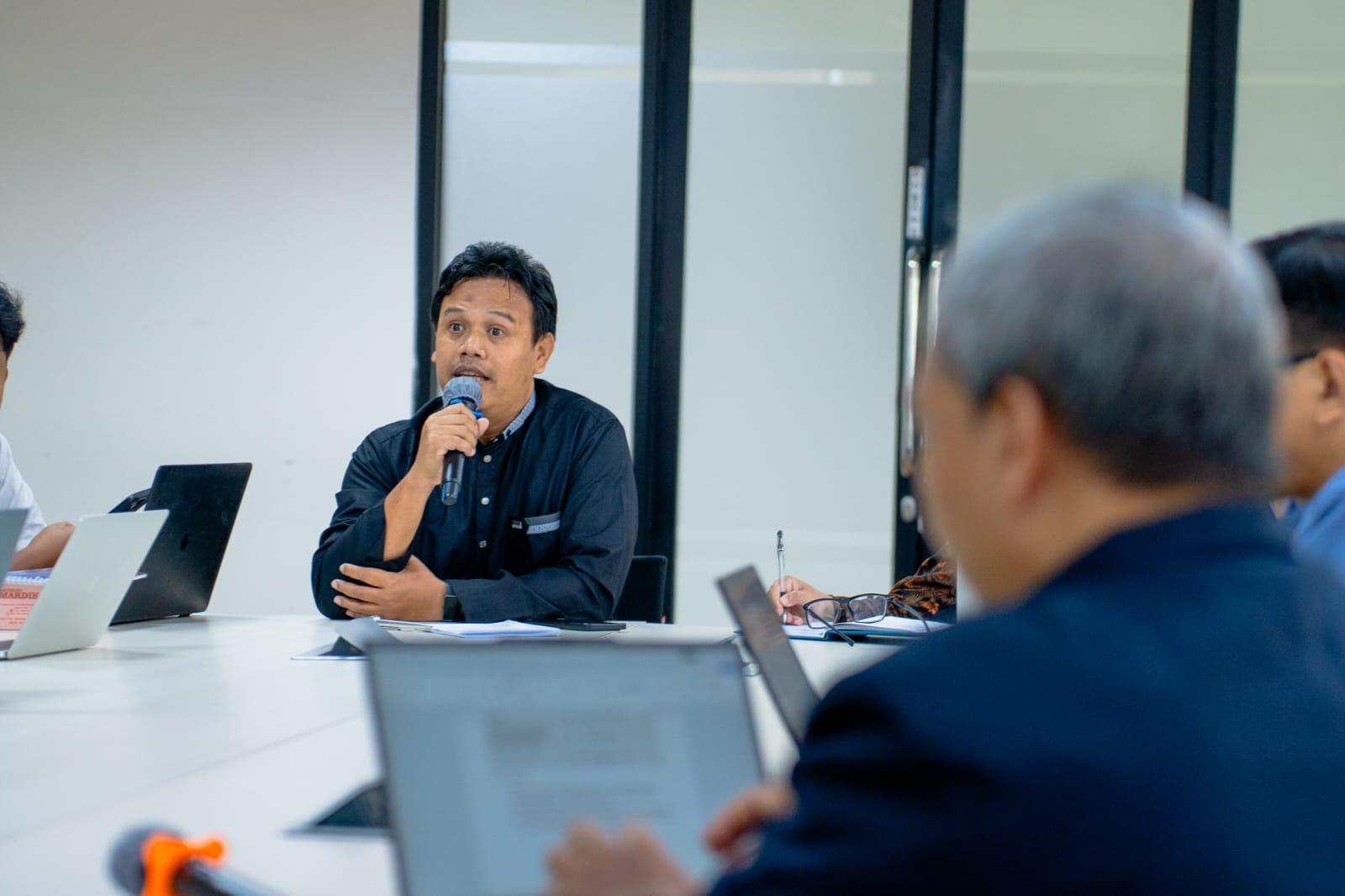
Jakarta, Indonesia – Dr. Murdianto, M.Si., Head of the Disability Services Unit (ULD) at Universitas Nahdlatul Ulama Yogyakarta (UNU Jogja), spoke at the Education Policy Dialogue on the Use of Data in Education Policy, themed “Learning from Data: Local, National, and Global Synergies in the Education Ecosystem.”
The event was organized by the Center for Education Policy Strategy (PSKP), under the Agency for Basic and Secondary Education Policy (BKPDM), Ministry of Primary and Secondary Education (Kemendikdasmen) of the Republic of Indonesia, in collaboration with the Global Partnership for Education Knowledge and Innovation Exchange Europe, Middle East and North Africa, Asia and Pacific (GPE KIX EMAP) Hub. It took place at the Jakarta Provincial Education Office on Monday, November 23.
The event was attended by Jakarta Head of Education Office Dr. Nahdiana; Director of the Knowledge and Innovation Exchange Europe, Middle East and North Africa (KIX EMAP) Hub, Jose Luis Canelhas; and Head of the Ministry's Agency for Basic and Secondary Education Policy, Prof. Toni Toharudin, who delivered the keynote speech at the opening session.
During the forum, Murdianto presented a study titled “Examining the Implementation Model of Universal Design for Learning and Efforts to Provide Reasonable Accommodation for Students with Disabilities in Indonesia’s Primary and Secondary Education.”
He emphasized that fulfilling the right to education for persons with disabilities requires more than ensuring access to schools. Learning systems must also be designed to accommodate the diverse needs and abilities of students.
According to data from the Education Data Portal as of October 2025, 343,931 students with disabilities received educational services at the primary and secondary levels, either in inclusive schools or special schools (SLB). Of this number, 177,689 students were enrolled in inclusive schools.
Murdianto said the data highlights the need to strengthen education policies that not only guarantee access but also ensure that students with disabilities receive reasonable accommodation throughout the learning process.
Universal Design for Learning and Reasonable Accommodation in Education
In his study, Murdianto explained that Universal Design for Learning (UDL) and reasonable accommodation are complementary approaches to building an inclusive education system.
UDL is an approach to designing learning systems that anticipates and reduces potential learning barriers from the outset. It encourages educators to consider diverse student needs through flexible lesson planning, content delivery, and assessment.
Meanwhile, reasonable accommodation focuses on adjustments tailored to the individual needs of students with disabilities. These adjustments are intended to address specific barriers experienced by each student based on assessment results.
Murdianto stressed that both approaches should be incorporated from the initial assessment and lesson-planning stages.
“This allows teachers to identify potential learning barriers early and determine strategies that are appropriate to each student's needs,” he said.
He also highlighted the gap between the ideals of inclusive education and its implementation in schools. In lesson planning, for example, learning activities are still often designed using a single approach for all students, with adjustments introduced only after a student with a disability is identified.
In terms of content delivery, learning remains dominated by lectures and conventional printed books or digital books that are not fully accessible to screen-reader users.
“UDL encourages the use of multiple forms of content representation, such as accessible text, audio, videos with captions, and tactile learning materials that engage the sense of touch,” he noted.
Gaps are also evident in learning assessments, which are still largely based on written examinations with rigid time limits. Furthermore, collaboration among classroom teachers, Special Education Support Teachers (GPK), Disability Services Units, counselors, psychologists, and therapists remains limited due to insufficient technical support for educators.
Six Recommendations to Strengthen Inclusive Education Policy
To address these challenges, Murdianto proposed several policy interventions that should be implemented in an integrated manner.
First, strengthening reasonable accommodation policies as the foundation for fulfilling the educational rights of students with disabilities. Second, enhancing the role and capacity of Disability Services Units to provide technical support to schools.
Third, developing the competencies of teachers and education personnel in delivering inclusive learning. Fourth, involving persons with disabilities in decision-making processes to ensure that policies reflect their needs and lived experiences.
Fifth, developing financing, evaluation, and assessment systems to support accessible education services. Sixth, integrating UDL principles into curriculum and learning policies so that inclusive education becomes part of the education system as a whole.
Murdianto also emphasized the importance of establishing intensive collaborative spaces that bring together diverse stakeholders. These should include policymakers, universities, teachers, therapists, counselors, psychologists, disability support communities, and the private sector.
He suggested that collaboration could be strengthened through the momentum of the International Day of Persons with Disabilities or dedicated forums designed to bring stakeholders together to formulate concrete measures for providing reasonable accommodation.
These efforts are supported by Law No. 8 of 2016 on Persons with Disabilities and Government Regulation No. 13 of 2020 on Reasonable Accommodation for Students with Disabilities. Both regulations affirm the responsibility of central and regional governments to facilitate the provision of reasonable accommodation.
The policy dialogue brought together academics, government representatives, international organizations, and education advocacy institutions. Participating institutions included Universitas Muhammadiyah Surakarta, Universitas Ahmad Dahlan, Universitas Indonesia, the Jakarta Provincial Education Office, UNICEF Indonesia, UNESCO Jakarta Regional Office, J-PAL Southeast Asia, and the Center for Education and Policy Studies. []
Reporter: Latifah
Share
Related News
UNU Jogja Integrates Decarbonomics into Learning with IGCN to Support Low-Carbon Economy Education
Published by Latifatussolikhah, 26 Nov, 2026 | Duration. 4 Minutes
UNU Jogja Promotes Innovation in Yogyakarta City’s Development Evaluation
Published by Latifatussolikhah, 26 Nov, 2026 | Duration. 4 Minutes
English Education Lecturer UNU Jogja Presents Research at IPEALS 2026 International Symposium organized by the Malaysia Association of Applied Linguistics
Published by Latifatussolikhah, 24 Nov, 2026 | Duration. 4 Minutes